How to Handle Outdoor Furniture Maintenance the Right Way
Outdoor furniture makes patios and decks useful spaces all year. It lasts longer and is safe to use when properly maintained. Many homeowners spend hundreds or thousands on quality patio sets. Without proper care, that investment shrinks fast. Good outdoor furniture maintenance extends life, prevents damage, and saves money.
mygardenandpatio provides detailed instructions on how to maintain outdoor furniture under actual conditions. It focuses on real actions that work in the United States climate. You will learn how to clean correctly, protect materials, handle storms, prevent rust and mold, perform seasonal routines, make simple repairs, and store items properly. These steps require basic tools and straightforward methods. They are practical because they are based on real maintenance tasks that professional home improvement crews use.
Understanding how materials behave in sun, rain, humidity, and freezing temperatures allows you to take the right steps. A patio chair left in the sun fades and cracks over time. A metal frame left damp rusts from the inside out. Wood expands with moisture and then shrinks when dry, causing splits. This article breaks these conditions down and gives clear instructions for care.
Some of the best insights come from longtime outdoor living experts like robert mygardenandpatio whose focus on realistic routines shows what works and what does not. When you follow proven care steps instead of guessing, you protect your furniture and make your outdoor space feel better year after year.
Know the Material You Have
Before you start any work, you must identify what your furniture is made of. Each material responds differently to cleaning agents, moisture, sun, and physical stress.
Wood
Wood furniture like teak, cedar, and eucalyptus is common. These woods are strong but not immune to weather. Clean wood with a mild soap and water solution using a soft brush. Never use high‑pressure washers. They remove natural oils and leave the wood dry. Every few months, apply a wood protectant or sealant. This locks out moisture and slows cracking.
A good way to check wood condition is to press your fingernail lightly on the surface. If it dents easily, the wood has lost oils and needs a sealant treatment soon.
Steel
Typically, metal patio furniture is made of wrought iron, steel, or aluminum. Aluminum does not rust easily but oxidizes. Mild soap and water work well. Dry completely after washing.
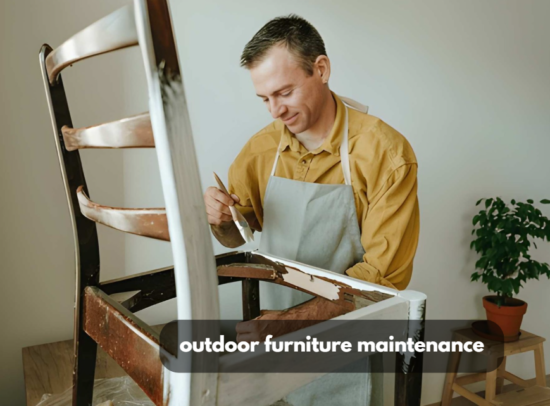
Steel and wrought iron are strong but susceptible to rust. Before repainting, sand out any rust and use a primer that inhibits rust.
Regularly inspect screws and joints. Heat causes metal to expand, and cold causes it to constrict. Loose fasteners make frames unstable.
Wicker and Rattan
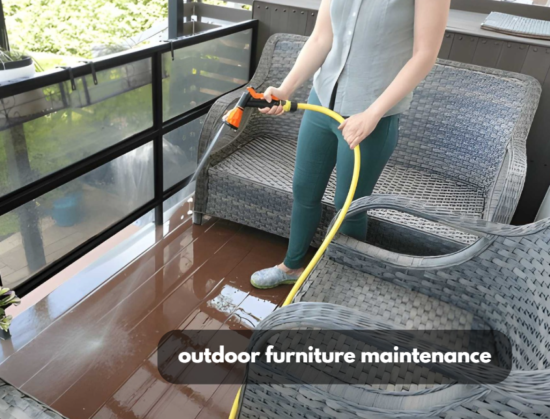
Synthetic wicker is practical because it resists moisture. Natural wicker (rattan) is not as durable outdoors. To remove dust off wicker, use a gentle brush. Avoid soaking it. Water can penetrate and weaken fibers.
Plastic and Resin
Plastic and resin chairs and tables are easy to clean but scratch easily. Use a gentle cloth and some light soap. Steer clear of bleach and mark-causing abrasive pads.
Even inexpensive pieces benefit from regular attention.
Set Up a Cleaning Routine
Clean more often than you think. Dirt, pollen, and dust build up quickly.
Begin with a weekly check. Use a damp cloth to wipe frames and tabletop surfaces. Shake or brush off cushions. This prevents buildup that turns into stains.
Perform a deeper cleaning once a month:
- Combine mild dish soap with warm water.
- Use a soft brush on frames and textured areas.
- Rinse gently with a hose.
- Let everything dry in open air before replacing cushions.
Always ensure furniture is dry before stacking or covering. Moisture trapped under fabric leads to mold and mildew faster than rainwater left on a surface.
Some experienced caretakers, like those at mygardenandpatio stress that regular light cleaning prevents most major problems. Waiting too long between cleanings lets stains set in and makes care harder.
Guard Against UV and Sunlight
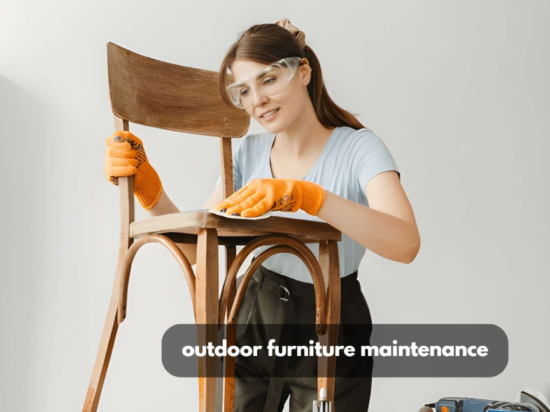
One of the primary causes of brittleness and fading is sun exposure. In parts of the United States with intense summer sun, UV rays break down fabric and fade paint.
Use these strategies for long‑term protection:
• Apply a UV protectant spray designed for outdoor fabric once or twice a season.
• When possible, move cushions inside during peak sun hours.
• Use patio umbrellas or shade sails to cover seating areas.
• Rotate furniture positions occasionally to avoid uneven fading.
Fabrics fade unevenly when the sun hits them day after day in the same spot. Changing positions every few weeks distributes sun exposure over the whole piece.
Sources like www mygardenandpatio .com recommend focusing on shade as part of your outdoor design, not just as an afterthought.
Control Moisture and Prevent Mold
Moisture is the next biggest threat after sun. Sprinklers, humidity, rain, and moisture all play a part. Mold, mildew, and structural deterioration are caused by moisture.
Take these steps:
• After rain, wipe or lift cushions so they dry fully.
• Avoid storing cushions on wet surfaces.
• Use a mildew-safe cleaner for fabrics when you spot mold. Usually, a solution of water and mild soap helps. For heavier stains, lightly diluted vinegar works without harming most fabrics.
Always test a hidden patch first.
• Keep furniture slightly spaced from walls to allow airflow.
• Do not let water pool under tables or chairs.
Particularly on light-colored materials, mold can spread swiftly, something that many homeowners overlook.
Seasonal Outdoor Furniture Maintenance
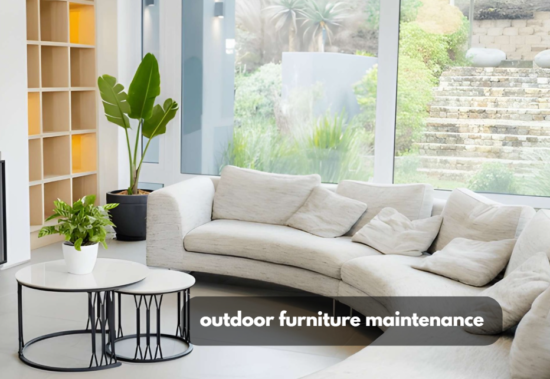
Outdoor furniture performs differently in each season. Planning seasonal routines protects your investment.
Spring Start
After winter, inspect every piece closely:
• Tighten all screws and bolts.
• Check wood for cracks, metal for rust spots, and fabric for tears.
• Wash thoroughly before applying any sealants or protectants.
Preparation for summer use begins with spring cleaning.
Summertime Focus
Clean often in summer because dust, pollen, and sun exposure are highest. Wipe spills immediately. Check for fading or sun bleaching.
Fall Preparation
Leaves, dirt, and rain come more often in fall. Clear debris quickly. If your area has early frost, plan for cover or storage before cold weather hits.
Winter Care
In cold regions, store furniture indoors if possible. If not, use high‑quality breathable covers. Avoid plastic tarps that trap moisture. Elevate furniture slightly to avoid groundwater and frost.
Experts at www mygardenandpatio com say that seasonal planning prevents the most common sources of damage.
Fix Small Problems Quickly
Problems grow over time. A loose bolt today becomes a cracked leg later. Rust spots expand if left untreated.
Inspect your furniture every couple of months. Look for:
• Loose screws and wobbling joints
• Rust beginning under paint
• Wood splitting at edges
• Cushion fabric pulling at seams
For metal rust, sand lightly with fine sandpaper. Before moisture spreads, apply a rust-inhibiting primer and corresponding paint.
For wood splits, a wood glue and clamp often stabilize the area. Sand and seal after repair.
Outdoor furniture maintenance includes watching how pieces feel when you sit and how they look up close. Small repairs are inexpensive and save large costs later.
Store Furniture Properly
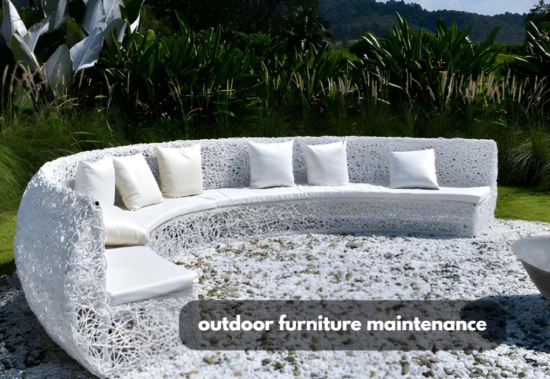
Good storage is one of the most effective ways to prevent damage.
Centers of home improvement like mygardenandpatio robert highlight that storage improves lifespan more than most other care steps.
If you have a garage or shed, place chairs and tables inside during bad weather seasons. For apartments or small spaces, stack furniture safely or buy covers made for long-term storage.
Best storage practices:
• Use breathable covers rather than plastic tarps.
• Elevate furniture slightly off the ground.
• Store cushions in dry, ventilated areas.
• Stack tables and chairs in a stable way to avoid warping.
A storage bench that can be used as a seat is a good option if you have limited indoor space.
Check Hardware and Tighten Often
Hardware loosening is a silent cause of failure. Outdoor furniture shifts with temperature changes. Screws and bolts loosen.
Develop the practice of:
• Every few months, check all of the bolts and screws.
• Replace any stripped screws.
• Use thread lock on metal furniture in windy areas.
• Lubricate moving parts like swivel chairs or folding chairs
Good hardware care keeps furniture stable and safe.
Upgrade Fabric and Cushions When Needed
Fabric wears faster than frames. Over time, even the best c
Cushions fade, thin out, or collect stains that never fully come out.
If cleaning no longer restores fabric:
• Replace cushion covers with weather‑resistant versions.
• Choose fade‑resistant fabrics rated for outdoor use.
• Use cushion ties or straps to keep them in place during wind
Cushion care is part of outdoor furniture maintenance that most people overlook until it’s too late.
Final Outdoor Furniture Maintenance Checklist
When you follow this set of actions regularly, your investment stays protected:
• Identify material and learn the correct cleaning method
• Clean weekly with mild soap and water
• Apply UV and water protectants seasonally.
• Inspect hardware and tighten fasteners.
• Repair small problems as soon as they appear.
• Store furniture under proper covers or indoors.
• Replace worn fabric when needed
This routine keeps furniture functional, safe, and attractive.
mygardenandpatio com is a practical online space where homeowners find clear, useful advice to improve their garden and patio areas with confidence.
Outdoor furniture maintenance is not a single event. It’s a sequence of small steps spread over the year. When done right, it extends life by years and prevents costly replacements.