Patio Lighting Ideas That Improve Comfort And Mood
A patio can look great during the day and still feel wrong at night. Too dark, and people go inside early. Too bright, and it feels like a parking lot. The right light fixes that.
Good patio lighting ideas are not about adding more fixtures. They are about shaping the mood. Soft light makes people stay longer. Warm tones make conversations feel easier. The right placement makes the space feel safe without feeling exposed.
Patios are now considered an extension of the living room in many American homes. People eat outside more. They work outside. They relax outside after long days. Lighting needs to support all of that.
You will find practical patio lighting ideas that improve comfort and mood. No hype. No complicated design talk. Just clear advice that works in real backyards.
Begin by imagining how you want it to feel
Determine how you want the area to feel at night before making any purchases.
Calm feels different from social. Quiet feels different from festive. Lighting controls that more than furniture does.
Warm white light is usually the safest choice. Most people in the US prefer bulbs between 2700K and 3000K for outdoor spaces. It feels similar to indoor lamps. It softens shadows. Skin tones look natural.
Cool white lighting often feels too sharp for patios. It works better for driveways or security areas.
One thing that often gets ignored is contrast. Lighting every nook and cranny is not necessary. Some darkness makes the space feel cozy. Too much light flattens everything.
Many designers, including advice often shared by robert mygardenandpatio, suggest thinking of your patio as an outdoor living room. You would not flood your living room with ceiling lights only. The same rule applies outside.
Use Layers Instead Of One Bright Source
The most common mistake is installing one strong light above the patio. It makes everything visible, but nothing feels comfortable.
Layered lighting works better.
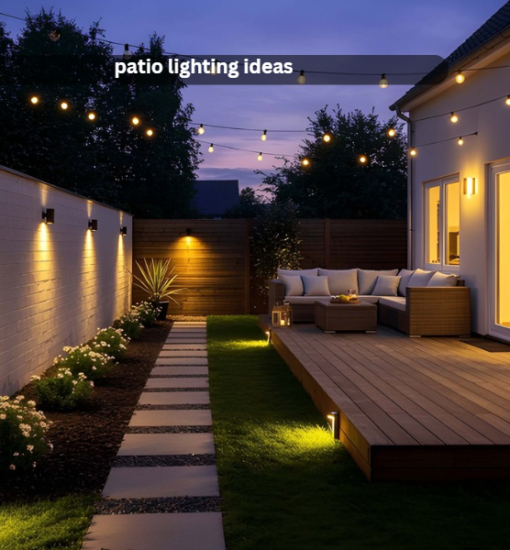
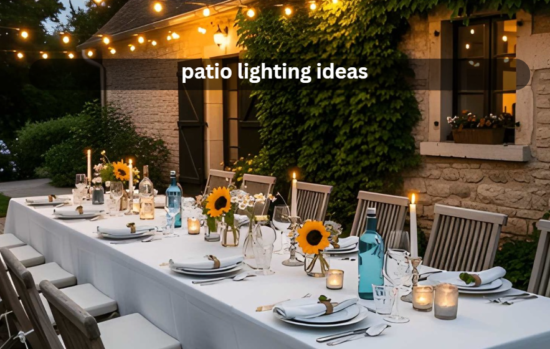
The first layer is general glow. This could be string lights, wall-mounted fixtures, or a pendant under a covered patio.
The second layer is focused light. For example, over a dining table or grill.
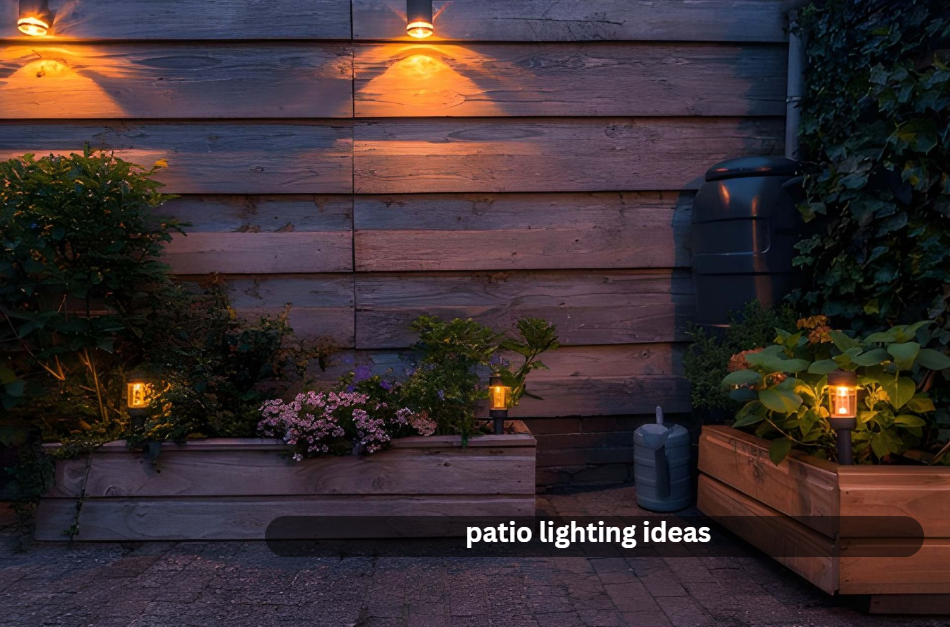
The third layer is accent light. This highlights plants, a stone wall, or steps.
Layering is one of the most effective patio lighting ideas because it gives depth. It makes the patio look finished rather than temporary.
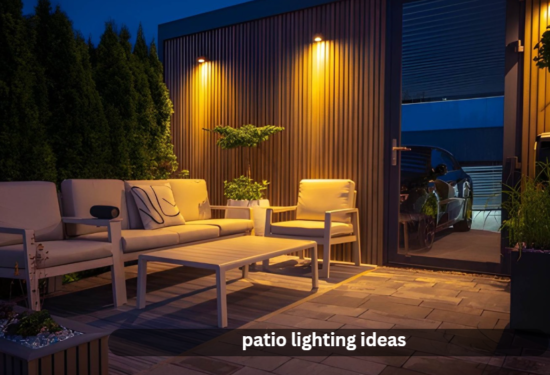
A practical trick is to put different lights on separate switches. That way you control the mood without changing bulbs.
You can see similar practical setups discussed on mygardenandpatio where outdoor comfort is the main focus rather than decoration.
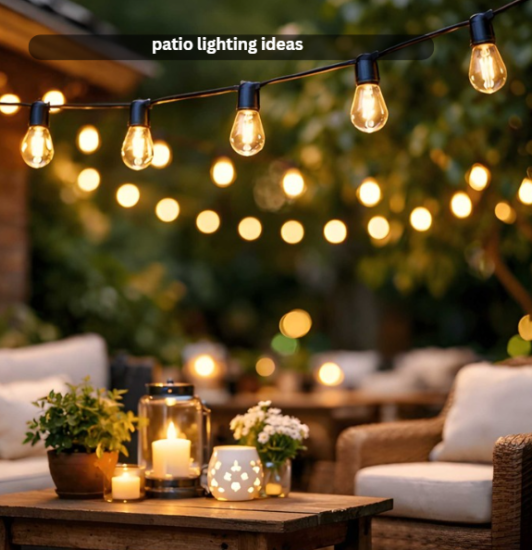
For some reason, string lights are still effective.
The popularity of string lights can be attributed to their simplicity. And they work.
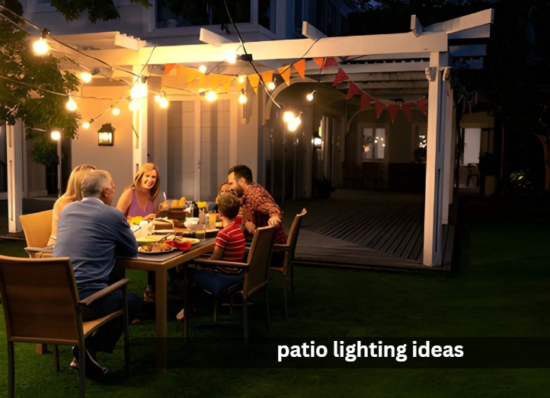
They create overhead warmth without harsh glare. They define the space visually. Even a small patio feels intentional once lights are strung above it.
In the US, LED string lights are the better option. They last longer. They use less energy. Many are rated for year-round weather.
Spacing matters. If lights hang too loose, they look messy. If they are too tight, they lose character. Use guide wire if you are stretching them across open space. That prevents sagging over time.
For smaller patios, crisscross patterns create balance. For larger areas, straight parallel lines look cleaner.
One overlooked tip is height. Hang them high enough so people do not feel closed in. Low-hanging lights can make tall guests uncomfortable.
You will often find real-world examples of these patio lighting ideas on www mygardenandpatio .com where layout and spacing are discussed in practical terms.
Path Lights Improve Comfort More Than You Think
Comfort includes safety. If guests feel unsure walking across your yard, they will not relax.
Path lights solve that quietly.
Place them along walkways, but do not line them up like runway lights. Stagger them slightly. It looks more natural.
Step lights are important if your patio has elevation changes. Even a small drop can cause accidents at night.
Low-voltage landscape lighting is common in American homes because it is efficient and safe. It gives enough brightness without being harsh.
Another smart move is keeping path lighting subtle. It should direct the viewer’s gaze rather than take over the room.
Consistency is also important. Mixing cool white and warm white bulbs makes the space feel uneven. Stick to one tone.
You may see advice about this balance on www mygardenandpatio com where comfort is treated as the priority.
Lanterns Add Flexibility
Not everything has to be wired.
Portable lanterns are useful because you can move them. If you rearrange furniture, your lighting can move with it.
Battery-powered or rechargeable lanterns are common now. Many are weather resistant and built for outdoor use.
Tabletop lanterns create soft pools of light. They work well for smaller patios where overhead lighting might feel too strong.
Floor lanterns placed near seating areas create intimacy. They pull attention inward rather than outward.
This flexibility is why many patio lighting ideas now include portable elements instead of only fixed fixtures.
Some practical suggestions shared by mygardenandpatio robert include testing lantern placement for a few evenings before committing to permanent lighting. It helps you understand how shadows fall naturally.
Fire As A Light Source
Firelight changes everything.
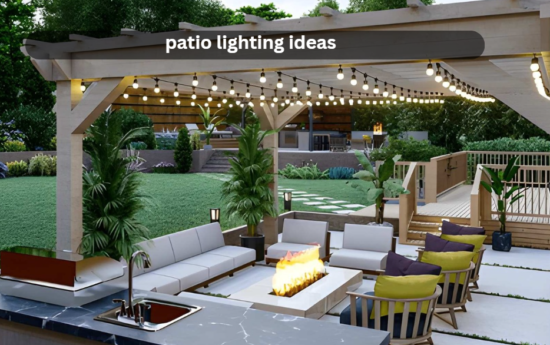
A fire pit or outdoor fireplace provides warmth and glow at the same time. It produces an organic focal point. Without being informed, people congregate around it.
Gas fire pits are easier to manage. Wood-burning versions feel more traditional but require more maintenance.
When you use fire as part of your patio lighting ideas, reduce competing light nearby. Let the flame be the highlight. Too much overhead lighting weakens the effect.
Firelight works best when surrounding lighting is low and soft. Consider it the focal point of the atmosphere.
Many outdoor setups shown on mygardenandpatio com combine fire features with subtle side lighting rather than bright overhead fixtures.
Smart Controls Make Life Easier
Smart lighting is practical, not flashy.
Timers can turn lights on at sunset. Dimmers let you lower brightness later in the evening. Smart plugs are an easy upgrade for string lights.
This is helpful for busy households. You do not need to remember to switch everything on or off.
Energy efficiency matters too. LED lights use less power and last longer. That saves money over time.
One useful idea is creating preset scenes. One for dinner. One for relaxing. One for gatherings. That small step makes your patio feel more intentional.
Many modern patio lighting ideas now include smart control as part of comfort rather than as a tech upgrade.
Placement Is More Important Than Quantity
Adding more lights rarely fixes a bad setup. Placement does.
Avoid placing bright lights directly at eye level. It creates glare. Instead, aim lights slightly downward or upward to bounce off surfaces.
Highlight what you want noticed. A textured wall. A tree. A seating area. Leave some areas darker to create depth.
Consider zones. dining room. The lounge area. walkway. Light each space in accordance with its function.
If every inch is lit the same way, the patio feels flat. Contrast creates mood.
That is the distinction between simple illumination and well-considered patio lighting solutions that actually increase comfort.
Final Thoughts
Good patio lighting does not have to be expensive. It just has to be planned.
Focus on warmth. Use layers. Add flexibility. Keep safety in mind. Avoid overlighting.
The goal is simple. Make people want to stay outside longer.
When lighting supports comfort instead of overpowering it, your patio becomes part of your home rather than just space behind it.