8+ Garden and Patio Tips from www mygardenandpatio .com
Most people want a yard that feels calm and simple. It’s a place that looks well and functions well for daily life, not a showpiece. That’s what www mygardenandpatio .com focuses on. The best outdoor spaces aren’t about how much you spend. They come from small choices done the right way. This guide breaks down eight easy tips that help you make your garden or patio look better, grow better, and stay that way.
Each section talks about one real thing you can do—plan smarter, choose plants that survive, keep soil alive, and use light and furniture that last. These ideas come from what works in American backyards, whether you live in a warm southern state or a cooler northern one. Nothing fancy here, just steps that make sense.
Start by knowing your space
Take a leisurely stroll around your area before planting or purchasing anything. Observe the areas that receive morning light and afternoon shadow. Feel the ground after rain. Does it stay wet or dry fast? These small details tell you how your garden behaves.
Draw a rough map. It doesn’t need to look perfect. Mark doors, trees, fences, and places you use most. This sketch helps you see what fits and what doesn’t. It also stops you from buying things that have no place to go.
Keep your goal simple. Maybe you want a spot to read, a place to grill, or a small flower bed for color. Choose one goal first. Later, you can build around it. Many people who follow www mygardenandpatio .com start with a small idea and end up with something that looks better than they planned.
Understand your climate and soil
Every yard lives in its own climate. Plants that thrive in Arizona die in Maine. Before buying anything, check your USDA zone. It tells you what plants can handle your winters. This small check saves money and frustration later.
Soil matters just as much. Dig a hole and look at what’s there. If it’s heavy clay, you’ll need compost to loosen it. If it’s sandy, you’ll need organic matter to help hold moisture. You can test soil pH with an easy kit from any garden store. The goal is to know what you’re working with, not guess.
When the soil drains well and plants fit the weather, everything else becomes easier. That’s a key lesson shared on mygardenandpatio.com.
Pick plants that fit your time and lifestyle
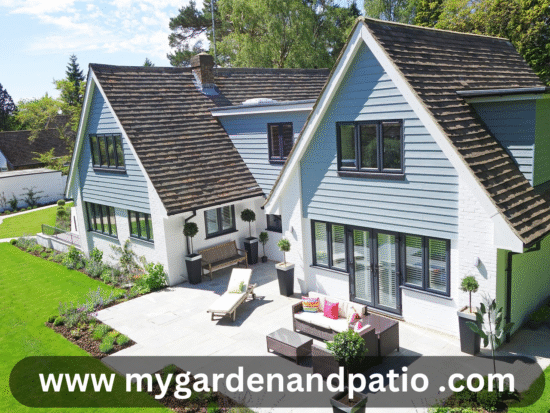
Don’t pick plants because they look nice in pictures. Choose what works for your time and care level. If you’re busy, go with hardy, low-maintenance plants. Drought-tolerant or native species stay alive with less effort.
Layer plants for shape. Use taller shrubs or grasses at the back, mid-size flowers in the middle, and small edging plants near paths. It gives structure and makes the space feel full.
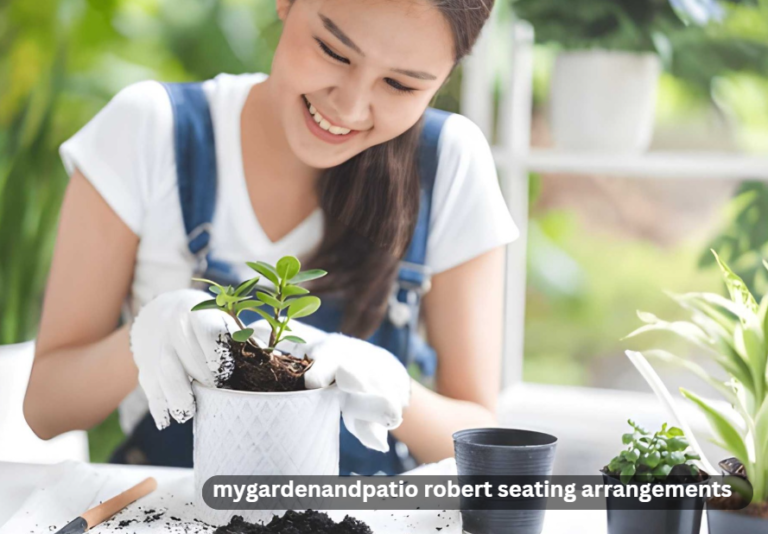
Mix herbs into your layout. They smell good and are easy to grow. Rosemary, thyme, and mint add both scent and taste to your patio. For small patios, pots do wonders. You can move them with the seasons or shift them for new looks.
The design ideas shared by robert mygardenandpatio focus on this simple balance—choose plants that look natural and don’t wear you out.
Plan furniture and layouts that fit the space
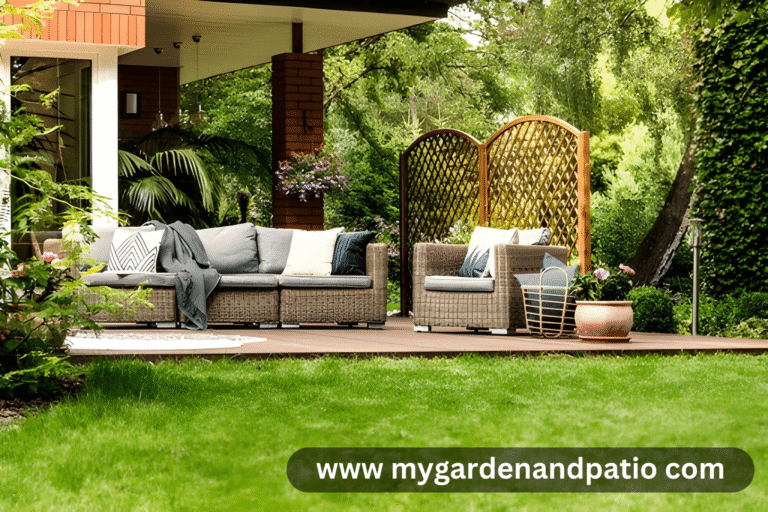
Outdoor furniture works best when it fits, not when it fills. Measure your area before shopping. Leave at least three feet for walking around tables and chairs. If you have a small patio, round tables take less room and make movement easier.
Buy the best quality you can afford. Strong wood, powder-coated metal, and weatherproof wicker last longer than cheap plastic. You’ll spend it once and enjoy it for years.
Pick one main piece—a good table, a bench, or a pair of chairs—then add smaller items later. Use an outdoor rug to tie it all together. It makes the area feel like an outdoor room instead of random furniture on concrete.
Many homeowners at www mygardenandpatio .com say this slow, steady approach gives the best results.
Add the right lighting for comfort and safety
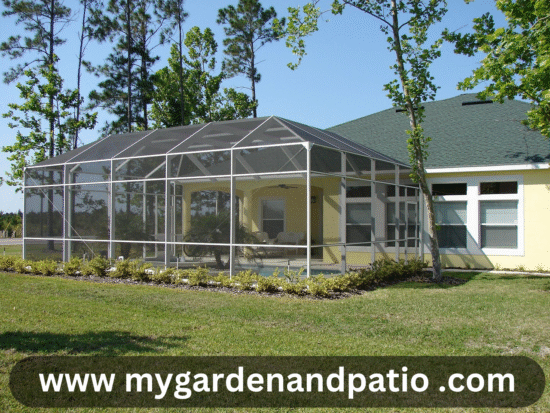
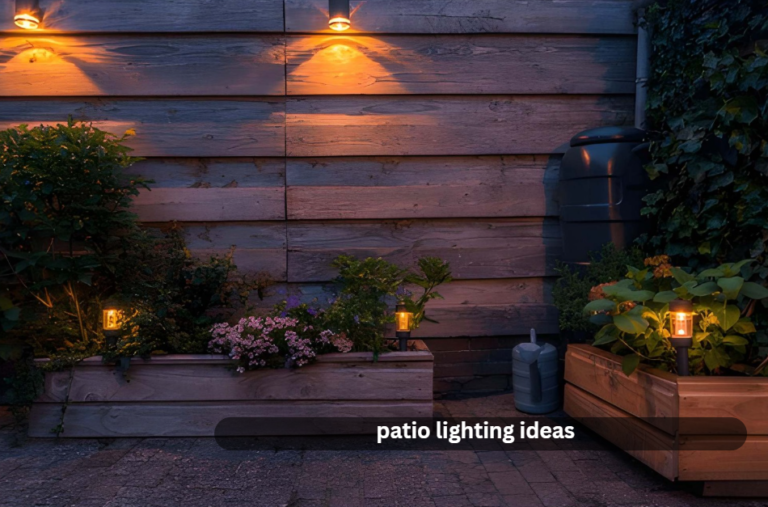
Lighting changes everything. It keeps your patio safe and makes nights outdoors relaxing. Start with basic path lights or step lights so nobody trips. Then add soft lighting for mood—string lights, lanterns, or small solar fixtures.
Make sure the light is low and warm. Steer clear of bright floodlights that obliterate everything. If you can, use a timer or smart plug to turn them on automatically at sunset. Uplighting under trees or behind plants adds depth and quiet drama.
Outdoor lighting doesn’t need to cost much. Even a single strand of bulbs can make the space feel special. It’s one of the most common upgrades people mention on www mygardenandpatio .com because it works every time.
Water smart and save effort
Overwatering ruins more plants than neglect. water in the early morning when there is little wind and the air is cool. This lets moisture reach roots instead of evaporating.
This kind of small change is what mygardenandpatio Robert calls “quiet care.” It saves time, money, and water all at once.
Feed the soil and protect it
Healthy plants start underground. Compost is the best thing you can give your soil. It adds nutrients, improves texture, and helps keep water in. You can make compost from food scraps, grass, and leaves.
After adding compost, spread a two-inch layer of mulch over beds. Mulch keeps weeds down and soil cool in summer. It also helps with erosion during heavy rain.
Avoid chemical fertilizers unless your soil test proves you need them. Natural soil stays alive with microbes and worms that do the work for free. Think of it as long-term health, not a quick fix.
Readers at www mygardenandpatio .com often say once they switched to compost and mulch, everything in their yard started growing better.
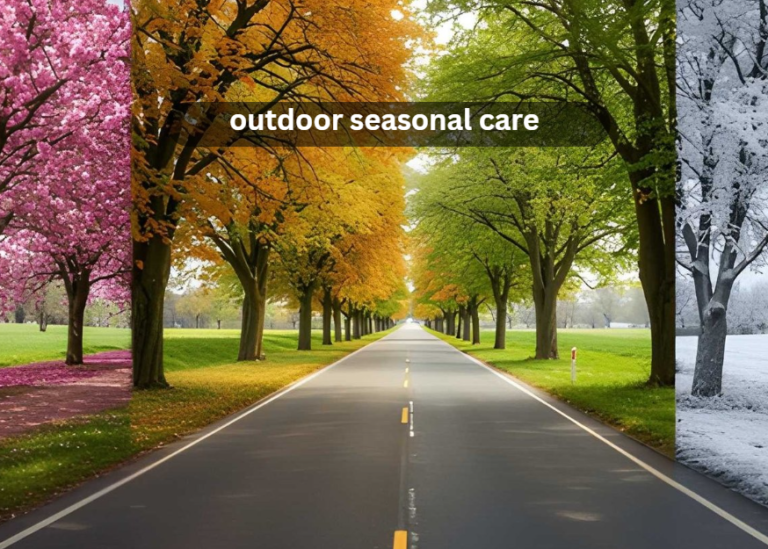
Follow the seasons
Each season brings its own work.
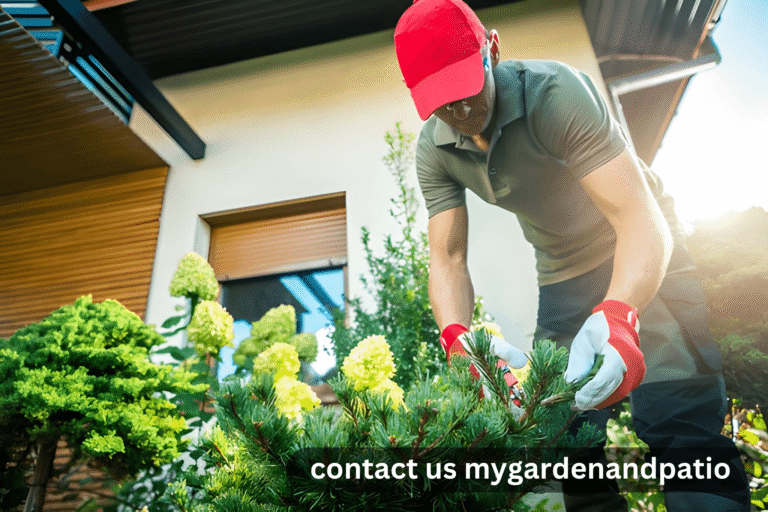
Spring is for cleanup—trimming, refreshing beds, and checking irrigation lines.
Summer is about keeping up—watering, weeding, and watching for pests.
Fall is for planting trees, adding compost, and getting ready for winter.
Winter is quiet—clean tools, store cushions, and plan new projects.
You can avoid feeling overburdened later if you complete the proper work at the right time. Simple, steady habits always win over rushed jobs. That’s one of the main lessons shared by www.mygardenandpatio.com.
Avoiding mistakes most people make
Crowding too many plants together looks messy and leads to disease. Always give space for air to move. Skipping drainage is another big problem. Standing water near the house or under furniture will cause damage over time.
Cheap furniture breaks fast, so buy fewer but better pieces. Also, take care of tools. A sharp pair of pruners and a strong shovel make work faster and safer.
Remember, the goal isn’t to copy pictures online. It’s to build something that fits you and lasts.
Add personal touches that make it yours
This is where your space becomes special. Add something that feels like you. Maybe a small statue, a handmade pot, or an herb bed near your door. Even one detail with meaning changes the mood.
If you cook, plant herbs near the kitchen. If you like quiet evenings, set up a simple chair under your favorite tree. For those who enjoy outdoor color, pick planters in tones that match your house.
You don’t need to overthink it. Start with one touch that makes you smile every time you walk outside.
When you need ideas, find us at mygardenandpatio—the place where everyday gardeners share honest, real-world ways to make life outdoors easier.
A real-world example
One small family in Ohio had a bare concrete patio that looked dull. They read through ideas on www mygardenandpatio .com and picked three to start. First, they added two large pots with native grasses that could handle wind and sun. Next, they laid a cheap but strong outdoor rug and placed a small metal table at the center. Finally, they strung soft lights along the fence.
Final thoughts
Building a space you adore doesn’t require expensive designs or large budgets. You need steady attention and simple choices that fit your home and weather. Start small and stay consistent.
Everything here comes from the same philosophy shared on www mygardenandpatio com — do less but do it well. Pay attention to what works for your environment rather than what looks good in advertisements.
The approach used by mygardenandpatio proves something clear. A great garden grows from care and patience, not from spending or trends. When you take your time, your patio starts to feel alive—calm, personal, and always ready when you step outside.